Memorizing Quran as a Revert - a Guide from Mathani


Bilal Chohan
27 October 2025
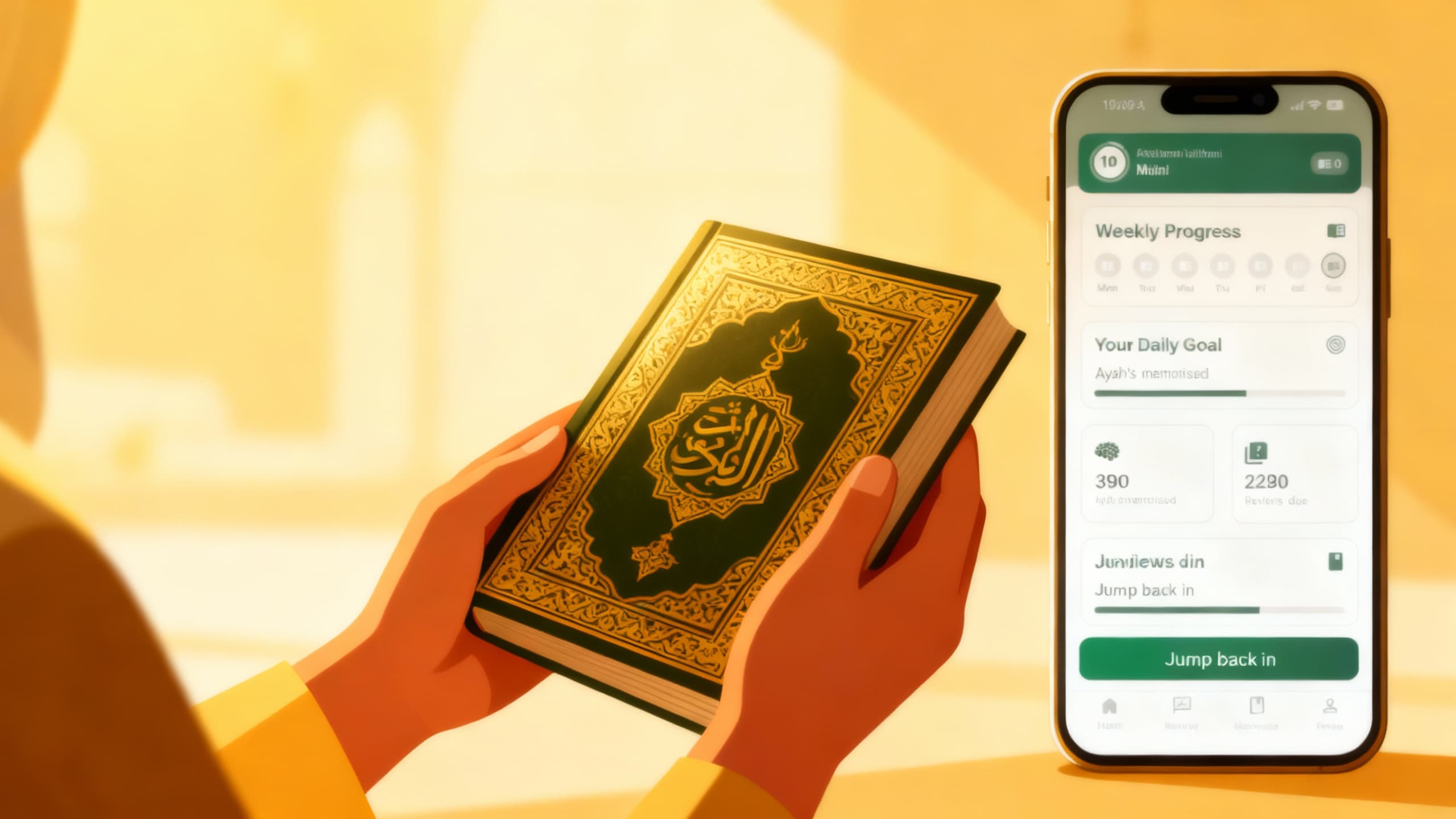
Memorizing Quran as a Revert: A Guide from Mathani
If you're a revert to Islam reading this, you might be carrying a particular kind of anxiety in your chest. You see born Muslims reciting Quran effortlessly from memory, their tongues flowing through Arabic words with a grace that seems impossible to achieve. Meanwhile, you're still struggling to pronounce "bismillah" correctly, let alone memorize entire surahs.
Perhaps you've hesitated to even try. "I don't speak Arabic," you tell yourself. "I'm too old to start." "I'll never sound like them." "Who am I to think I could memorize the Quran?"
Let me stop you right there with a truth that needs to be said clearly and firmly: The Quran is YOUR book too. It was revealed for all of humanity, including you. And the journey of memorizing it—however slowly, however imperfectly—is one of the most beautiful acts of worship you can undertake.
This guide is written specifically for you, the revert Muslim who wants to build a relationship with the Quran but doesn't know where to start. We'll walk through this journey together with gentleness, realistic expectations, and practical strategies that honor both your challenges and your tremendous courage.
You are not behind. You are not less than. You are exactly where you need to be, and your journey is about to begin.
You Don't Need to Know Arabic to Start
This might be the most important thing you read in this entire guide: You do not need to speak, read, or understand Arabic to begin memorizing the Quran.
Let that sink in for a moment. Because it contradicts what many reverts assume and what, sadly, some well-meaning but misguided Muslims might have told you.
The Historical Reality
Throughout Islamic history, millions of non-Arab Muslims have memorized the Quran without speaking Arabic as their native language. From Indonesia to Bosnia, from China to Nigeria, huffaz (those who have memorized the Quran) come from every linguistic background imaginable.
The companions of the Prophet (peace be upon him) included non-Arabs who learned and memorized Quran. Salman al-Farsi was Persian. Bilal ibn Rabah was Abyssinian. Suhaib ar-Rumi was Byzantine Roman. They didn't speak Arabic natively, yet they became some of the greatest Muslims in history.
You are walking a path that has been walked by countless others before you.
How Is This Possible?
You might be wondering: how can you memorize something in a language you don't understand? The answer lies in understanding that language acquisition has multiple pathways.
When a child learns their first language, they don't start by studying grammar or vocabulary lists. They listen, they imitate, they repeat. Meaning comes later, through context and repetition. The same process works for Quran memorization.
You can absolutely memorize the sounds, rhythms, and patterns of Quranic Arabic through listening and repetition, even before fully understanding the meaning of every word. In fact, this is often the most effective approach.
The Two-Track Approach
Think of your Quran learning as having two parallel tracks:
Track 1: Memorization - Learning to recite verses from memory through listening, repetition, and practice. This is primarily auditory and doesn't require Arabic literacy.
Track 2: Understanding - Learning what the verses mean through translation and tafsir. This happens alongside memorization but at its own pace.
These tracks support each other but don't need to move at the same speed. You might memorize a surah in two weeks but spend months gradually deepening your understanding of its meanings. That's not just okay—it's normal.
The Comfort of Not Understanding
Here's something rarely discussed: there's actually a hidden advantage to memorizing Quran without being a native Arabic speaker. You're less likely to let your mind wander or get distracted by word meanings. You can focus purely on the pronunciation, rhythm, and spiritual connection.
Many native Arabic speakers struggle with this because their minds are constantly processing meaning, which can actually interfere with pure memorization. Your non-Arabic background removes this particular challenge.
Start Where You Are
If you already know some Arabic, wonderful—use that as your foundation. If you know zero Arabic beyond "Allahu Akbar," that's also wonderful—you're starting fresh with no bad habits to unlearn.
The only requirement for starting is wanting to start. Everything else—the pronunciation, the fluency, the understanding—will come gradually, step by step, word by word.
A Word About Arabic Literacy
While you don't need to know Arabic to memorize, learning to read Arabic script will eventually become helpful. But even this can be learned gradually, in parallel with your memorization.
Many reverts find that memorizing first, then learning to read Arabic script, works better than the reverse. Once you've memorized a surah by listening, learning to recognize those same words in written form becomes much easier.
Apps like Mathani provide transliteration (Arabic words written in English letters) and audio, allowing you to memorize while gradually learning the Arabic script at your own pace.
The Bottom Line
Every hafiz, whether Arab or non-Arab, born Muslim or revert, started by not knowing the Quran. Every single one had a moment where they looked at or listened to a verse for the first time and thought, "I'll never be able to do this."
They were wrong. And so are you, if you're thinking that now.
You absolutely can do this. Your non-Arabic background is not a barrier—it's simply the starting point of your unique journey.
Setting Appropriate Expectations
One of the biggest obstacles reverts face in Quran memorization isn't ability—it's unrealistic expectations that lead to discouragement and giving up.
Let's get brutally honest about what this journey actually looks like, so you can approach it with wisdom rather than disappointment.
The Comparison Trap
You see a 10-year-old born Muslim rattle off Surah Yaseen perfectly and think, "I'm an adult and I can't even memorize Surah Al-Ikhlas without stumbling. What's wrong with me?"
Here's what's wrong: absolutely nothing. That 10-year-old has been hearing Quranic Arabic since before they were born, in their mother's womb. They've heard it at home, in the masjid, from relatives, on TV and radio. By age 10, they've had 10+ years of passive exposure.
You had zero. You started from absolute zero, possibly as an adult when language acquisition is naturally slower. Comparing your progress to theirs is like comparing a person who just started running to someone training for their fifth marathon.
The Timeline Reality
Let's talk real numbers so you know what "normal" actually looks like for revert memorizers:
Surah Al-Ikhlas (4 verses): Could take 1-2 weeks for a revert to memorize solidly, versus 1-2 days for someone with Arabic background.
Surah Al-Mulk (30 verses): Might take 2-4 months for a revert, versus 2-4 weeks for someone else.
First Juz (approximately 20 pages): Could take 6-12 months for a revert, versus 2-4 months for others.
These are general estimates, but the point is clear: your timeline will be longer. That's not failure—that's reality. And it's perfectly okay.
What "Memorized" Actually Means
Here's another expectation to adjust: memorization isn't a light switch that flips from "not memorized" to "perfectly memorized forever."
It's more like a spectrum:
Level 1: Can recite with prompting (someone says the first word, you can continue) Level 2: Can recite independently but with occasional hesitations Level 3: Can recite smoothly without mistakes Level 4: Can recite smoothly, correctly, and quickly Level 5: Can recite perfectly months or years later without review
Most people think "memorized" means Level 5, then feel like failures when they're at Level 2. The truth is that even Level 2 is an achievement worth celebrating, and with review, it will become Level 3, then 4, then 5.
The Plateau Periods
There will be weeks or even months where you feel like you're not improving. You're practicing daily but nothing seems to stick better than before. This is called a plateau, and it's completely normal in any learning process.
What's actually happening during plateaus: your brain is consolidating what you've learned, building stronger neural pathways, preparing for the next leap forward. Plateaus aren't evidence of failure—they're evidence of progress happening beneath the surface.
The mistake is quitting during a plateau, right before the breakthrough that was coming.
The Forgetting Is Normal
You will forget verses you thought you had solidly memorized. This will happen repeatedly. It's frustrating, it feels discouraging, but it's absolutely normal.
Even advanced huffaz forget verses without regular review. The Prophet (peace be upon him) himself said, "Keep refreshing your knowledge of the Quran, for I swear by Him in Whose Hand my soul is, it is more likely to escape than a camel which has been tied" (Bukhari).
Forgetting isn't failure—it's the nature of memorization. The solution isn't to be harder on yourself; it's to build a review system (which apps like Mathani provide automatically through spaced repetition).
Quality Over Speed
In Muslim communities, there's sometimes subtle (or not so subtle) competition around memorization speed. "He memorized the whole Quran in one year!" These stories can make you feel slow and inadequate.
Here's the truth: rushing through memorization usually results in weak, unstable retention. The person who takes five years to memorize the Quran but truly knows it is in a better position than someone who "finished" in one year but can barely retain it.
Your goal isn't to memorize fast. Your goal is to build a lasting relationship with the Quran that will serve you for decades. That requires patience, not speed.
Celebrate Different Goals
Maybe your goal isn't to become a hafiz (someone who's memorized the entire Quran). Maybe you just want to memorize enough to recite in your daily prayers, or to have your favorite surahs in your heart.
That's not a lesser goal. That's YOUR goal, and it's beautiful and valid.
The Quran says Allah doesn't burden a soul beyond what it can bear (2:286). Your journey might look different from others', but if you're sincerely engaging with Allah's words to the best of your ability, that's exactly what He asks of you—nothing more.
The One Non-Negotiable Expectation
There is one expectation you absolutely should have: that if you show up consistently, practice regularly, and don't give up, you WILL make progress.
It might be slower than you hoped. It will definitely be harder than you imagined. But you will move forward.
Every revert who has successfully memorized Quran—and there are thousands—had moments of doubt, frustration, and feeling inadequate. The difference between them and those who gave up isn't talent or natural ability. It's simply that they kept going.
Starting with Short, Meaningful Surahs
When you first decide to memorize Quran as a revert, the question "where do I start?" can feel overwhelming. The Quran has 114 surahs and over 6,000 verses. Where do you even begin?
The answer, practiced by teachers for centuries, is beautifully simple: start small, start meaningful, and start with what you'll actually use.
The Traditional Starting Point: Juz Amma
Most Quran teachers, whether teaching children or adult reverts, begin with Juz Amma—the 30th section of the Quran, containing short surahs from Surah An-Nas (Chapter 114) working backward.
There are brilliant reasons for this approach:
Short Length: Most surahs in Juz Amma are between 3-20 verses, making them achievable goals for beginners.
Daily Utility: These are the surahs Muslims most commonly recite in daily prayers, so you'll use what you memorize immediately.
Rhythmic Patterns: Many of these surahs have strong rhyme schemes and rhythmic patterns that make memorization easier.
Powerful Meanings: Despite their brevity, these surahs contain profound spiritual messages that will impact your daily life.
The Recommended Sequence for Reverts
Here's a suggested progression that balances ease of memorization with meaningfulness:
Stage 1: The Essentials
- Surah Al-Ikhlas (Chapter 112) - The essence of Islamic monotheism in 4 powerful verses
- Surah Al-Falaq (Chapter 113) - Seeking protection from evil
- Surah An-Nas (Chapter 114) - Seeking protection from whispers
These three are short, commonly recited, and rhythmically beautiful. They're also known as "Al-Mu'awwidhatan" (the protective surahs) and carry immense spiritual benefit.
Stage 2: Prayer Enhancement 4. Surah Al-Fatihah (Chapter 1) - The opening of the Quran, recited in every unit of prayer 5. Surah Al-Kawthar (Chapter 108) - Only 3 verses, about Allah's abundant gifts 6. Surah Al-Asr (Chapter 103) - Only 3 verses, containing the formula for success in life
Stage 3: Building Confidence 7. Surah Al-Qadr (Chapter 97) - About the Night of Power 8. Surah Al-Zalzalah (Chapter 99) - About the Day of Judgment 9. Surah At-Tin (Chapter 95) - About human nature and purpose 10. Surah Ad-Duha (Chapter 93) - Allah's reassurance and promise
By the time you've completed these ten surahs, you'll have memorized approximately 70 verses and built a foundation of confidence and technique.
Why These Surahs Matter for Reverts
Beyond being short and memorable, these surahs address themes that often resonate deeply with revert experiences:
Surah Al-Ikhlas clarifies the concept of God that may have been confusing before Islam.
Surah Ad-Duha addresses feelings of abandonment and uncertainty—something many reverts experience when they convert.
Surah Al-Asr provides a complete life philosophy in just three verses—purpose, faith, righteous deeds, mutual encouragement.
When you memorize these surahs, you're not just learning words; you're internalize core Islamic teachings that will shape your worldview.
The Mistake to Avoid
Some reverts, in their enthusiasm, want to start with long, famous surahs like Surah Yaseen or Surah Al-Kahf. While these are beautiful and important, starting here often leads to frustration and abandonment.
It's like someone who's never exercised deciding to run a marathon next week. The ambition is admirable but the approach is flawed.
Build your capacity gradually. Those longer surahs will still be there when you're ready, and you'll actually succeed at memorizing them because you've built the skills and stamina through shorter surahs first.
Making Surahs Meaningful
As you memorize each surah, take time to understand its context and message:
- Read the English translation multiple times
- Learn the story of when/why it was revealed (asbab an-nuzul)
- Reflect on how it applies to your life
- Share what you've learned with someone else
This transforms memorization from a mechanical task into a spiritual journey. You're not just storing sounds in your brain—you're enriching your soul with divine guidance.
Using What You Memorize
The most effective way to solidify memorization is immediate application. Use the surahs you've memorized in your prayers:
Once you know Al-Ikhlas, recite it in your prayer instead of repeating Al-Fatihah. When you've memorized five surahs, rotate through them in your daily prayers. As your collection grows, you can pray longer prayers with different surahs each time.
This practical application creates a positive feedback loop: memorization improves your prayers, which reinforces memorization, which enables even better prayers.
The Milestone Mindset
Instead of thinking "I have 114 surahs to memorize" (overwhelming), think "I'm going to memorize my next surah" (achievable).
Every single surah you complete is a milestone worth celebrating. You're not racing to the finish line—you're collecting precious spiritual gems, one at a time.
The Importance of Listening Before Memorizing
If there's one technique that will dramatically accelerate your Quran memorization as a revert, it's this: listen extensively before you attempt to memorize.
This might seem counterintuitive. Surely the way to memorize is to practice reciting, right? Not quite—at least not at first.
Why Listening Comes First
Think about how you learned your first language. Before you spoke a single word, you spent months listening. Babies are exposed to thousands of hours of language before they attempt their first "mama" or "dada."
The same principle applies to Quranic Arabic. Your brain needs significant exposure to the sounds, rhythms, and patterns before it can effectively reproduce them.
For a revert who didn't grow up hearing Quranic recitation, this listening phase is absolutely critical—and often skipped, which is why many struggle.
What Listening Actually Does
When you listen to Quranic recitation repeatedly, several crucial things happen:
Sound Recognition: Your brain learns to distinguish between similar Arabic sounds that don't exist in English (like ح versus ه, or ع versus أ).
Rhythm Internalization: Quranic Arabic has a specific melodic rhythm. Your brain needs to internalize this rhythm before you can recite naturally.
Pattern Awareness: You begin recognizing repeated phrases and structures, which makes memorization dramatically easier.
Pronunciation Modeling: You're absorbing correct pronunciation passively, so when you start to recite, you already have a mental model.
Emotional Connection: Listening to beautiful recitation stirs something in the heart that dry memorization never will.
The 70/30 Rule
Here's a practical framework: for any surah you want to memorize, spend 70% of your time listening and only 30% actively practicing recitation.
For example, if you're dedicating 30 minutes daily to memorizing Surah Al-Mulk:
- 20 minutes: Listening to professional recitation (in various contexts)
- 10 minutes: Active practice (reciting along, testing yourself, reviewing)
This ratio might feel backwards, but it works remarkably well, especially for reverts starting from zero Arabic background.
How to Listen Effectively
Not all listening is created equal. Here's how to maximize the benefit:
Active Listening Session (10-15 minutes daily): Sit quietly, follow along with the text (Arabic or transliteration), and give your full attention to the recitation. No multitasking.
Passive Listening (Throughout the day): Play the surah you're memorizing during your commute, while cooking, before bed, during exercise. Your subconscious is absorbing patterns even when you're not actively focused.
Repetitive Listening: Don't listen to different surahs constantly. Stick with the one you're currently memorizing. Listen to the same surah 20, 50, 100 times. Repetition is key.
Single Reciter Consistency: Choose one reciter and stick with them for each surah. Different reciters have different styles, and consistency helps your brain lock in patterns. (You can explore variety later; beginners need consistency.)
Verse-by-Verse Listening: Many apps, including Mathani, allow you to loop individual verses. Listen to one verse 10-20 times before moving to the next.
Recommended Reciters for Beginners
Some reciters are particularly good for beginners because of their clear pronunciation and moderate pace:
- Sheikh Mishary Rashid Alafasy (clear and measured)
- Sheikh Mahmoud Khalil Al-Hussary (teaching style, perfect for beginners)
- Sheikh Muhammad Siddiq Al-Minshawi (beautiful but clear)
- Sheikh Saad Al-Ghamdi (slower pace, good for following along)
The Listening-Before-Bed Technique
One particularly powerful approach: listen to the surah you're memorizing right before sleep. Play it on repeat as you fall asleep.
Why this works: Your brain consolidates memories during sleep, especially recently acquired ones. By exposing your brain to the Quran just before sleep, you're giving it optimal material for consolidation.
Many reverts report that surahs they listened to before bed suddenly "clicked" and became much easier to memorize the next day.
Listening with Translation
As you listen, regularly check the English translation. You don't need to memorize the translation, but understanding what you're hearing creates multiple memory pathways.
When you know that a particular verse is about patience during hardship, that meaning becomes a mental hook that helps you remember the Arabic words.
The Mistake Reverts Often Make
Many reverts skip intensive listening and jump straight to trying to recite. They look at transliteration, attempt to sound out words, and struggle painfully through each verse.
This approach is inefficient and discouraging. Without the listening foundation, you're forcing your brain to process unfamiliar sounds while simultaneously trying to produce them. It's cognitive overload.
By listening first—really listening, deeply and repeatedly—you make the later practice phase 10 times easier.
When to Transition to Active Practice
How do you know you've listened enough? Try this test: Can you "hear" the verse in your mind? If you close your eyes and try to mentally recite the verse (silently, in your head), can you hear the reciter's voice?
If yes, you're ready to start active practice. If no, keep listening.
Technology Makes This Easy
One of the greatest advantages modern reverts have is instant access to high-quality recitation. Previous generations had to rely on cassette tapes or whatever they could hear in the masjid.
You have apps like Mathani where you can:
- Loop individual verses infinitely
- Slow down recitation speed
- Follow along with highlighted text
- Download for offline listening
- Switch between reciters
Use these tools. They've turned what used to take months into something achievable in weeks.
Building Your Arabic Vocabulary Naturally
One of the beautiful secrets about memorizing Quran as a revert is this: as you memorize, you automatically build Arabic vocabulary. You don't need formal Arabic classes (though they help)—the Quran itself becomes your teacher.
The Organic Learning Process
Unlike traditional language learning where you memorize word lists and grammar rules, Quran memorization allows you to acquire Arabic naturally through context and repetition.
You'll notice that certain words appear again and again: "Rahman" (Most Merciful), "rahim" (Most Compassionate), "yaum" (day), "sama" (sky), "ard" (earth). After encountering these words in dozens of verses, you'll know them without ever sitting down to study them formally.
High-Frequency Quran Words
Research shows that just 300 words make up approximately 70% of the Quran's text. This means that as you memorize more surahs, you're encountering the same core vocabulary repeatedly.
For example, once you've memorized the last 10 surahs (Juz Amma), you'll already be familiar with:
- Allah (God)
- Rabb (Lord)
- Rahman (Most Merciful)
- Nas (people/mankind)
- Yaum (day)
- Nur (light)
- Nar (fire)
- Sama (sky)
- Ard (earth)
- And dozens more
You didn't study these words—you absorbed them through memorization and understanding.
The Context Advantage
Traditional vocabulary learning in isolation ("Rahman means merciful") is far less effective than learning words in meaningful context ("Rahman ar-Rahim" at the start of almost every surah, as you learn about Allah's mercy).
When you memorize "Qul huwa Allahu ahad" (Say: He is Allah, One), you're not just learning that "ahad" means "one"—you're internalizing the entire concept of Islamic monotheism with emotional and spiritual weight attached to the word.
Context creates sticky memories. This is why you'll remember Quranic vocabulary long after you'd forget a word from a flashcard app.
Root Word Patterns
Arabic is built on three-letter root systems. Once you start recognizing these patterns in the Quran, your learning accelerates exponentially.
For example, the root ر-ح-م (r-h-m) relates to mercy:
- Rahman (Most Merciful)
- Rahim (Most Compassionate)
- Rahma (mercy)
- Rahmatan (as mercy)
As you memorize more Quran, you'll start noticing these patterns naturally. "Oh, that word has the same root as this other word I know—they must be related!"
Practical Vocabulary Building Strategies
Strategy 1: Word-of-the-Week Each week, choose one frequently occurring Quranic word from the verses you're memorizing. Write it down, learn its meaning deeply, and notice every time you encounter it throughout the week.
Strategy 2: Root Word Exploration When you encounter an interesting word, look up its three-letter root and find other Quranic words from the same root. Apps and websites can help with this.
Strategy 3: Personal Vocabulary Journal Keep a simple notebook where you write down new words as you encounter them in memorization, along with the verse they came from and their meaning. Review this journal weekly.
Strategy 4: Translation Comparison Read multiple English translations of the verses you're memorizing. Different translators use different English words for the same Arabic word, which gives you a richer understanding of the Arabic term's full meaning.
Strategy 5: Daily Word Immersion Choose one Quranic word and use it throughout your day. If you learned "sabr" (patience), consciously think "I need sabr" when you're stuck in traffic, or "Alhamdulillah for sabr" when you handle a frustration well.
The 80/20 Principle
You don't need to understand every single word to understand the message. Focus on the 20% of words that give you 80% of the meaning—usually the nouns, verbs, and key concepts.
It's okay to memorize verses where you understand the general message but not every tiny particle word. Your understanding will deepen over time.
Grammar Through Exposure
As you memorize more Quran, you'll naturally start recognizing grammatical patterns even without formal grammar study:
- Verb patterns (past, present, command)
- Masculine and feminine forms
- Singular, dual, and plural forms
- Common phrases and expressions
This is called "implicit learning"—your brain picks up patterns without conscious effort. Children learn their native language's grammar this way long before they study it formally in school.
When to Pursue Formal Arabic Study
While Quran memorization naturally builds vocabulary, formal Arabic study can accelerate and deepen your understanding. Consider pursuing formal classes when:
- You've memorized at least Juz Amma (good foundation)
- You want to understand Quran more deeply during salah
- You're curious about nuances in meanings
- You have time and resources available
But don't feel you need formal classes to start or continue memorizing. Millions of non-Arab huffaz have memorized the entire Quran without becoming Arabic scholars.
The Beautiful Paradox
Here's something wonderful: as you memorize more Quran, your Arabic improves. And as your Arabic improves, your memorization becomes easier. It's a virtuous cycle.
The revert who memorizes 5 juz will find the 6th juz easier than the 1st because they've now encountered the core vocabulary and patterns dozens of times.
Be patient with the process. Your Arabic vocabulary is growing every time you memorize a verse, even if you don't consciously realize it.
Dealing with Imposter Syndrome
If there's one challenge that nearly every revert faces in their Quran memorization journey—and that rarely gets discussed openly—it's imposter syndrome.
You know the feeling: You're in the masjid, about to recite, and a voice in your head whispers, "Who are you to recite Quran? You're not a real Muslim. You don't even pronounce it right. These born Muslims are probably judging you."
Let's address this head-on with both compassion and truth.
What Imposter Syndrome Is
Imposter syndrome is the persistent feeling that you're a fraud, that you don't belong, that you're not "real" or "legitimate" despite evidence of your competence or accomplishment.
For reverts, this often manifests as:
- Feeling like you'll never be a "real Muslim" like those born into Islam
- Believing your Quran recitation is inferior and embarrassing
- Hesitating to pray audibly or lead prayer because others might judge you
- Downplaying your progress ("I only know a few surahs, it's nothing")
- Avoiding masjid participation because you feel inadequate
Why Reverts Experience This Intensely
Several factors make imposter syndrome particularly acute for reverts:
Cultural Foreignness: Islam comes with cultural expressions (Arabic greetings, dress codes, food traditions) that feel foreign. You're not just learning a religion—you're navigating cultural waters you didn't grow up in.
Visible Struggle: Your pronunciation errors and slower recitation are obvious, while born Muslims' struggles (with sincerity, consistency, understanding) are internal and invisible. This creates a false comparison.
Lack of Childhood Foundation: You're building from scratch what others built across 20+ years of gradual exposure. It's like joining a marathon at mile 15 while everyone else started at the beginning.
Community Assumptions: Sometimes well-meaning Muslims make assumptions or give unsolicited advice that reinforces your feeling of being "other" or "less than."
The Truth You Need to Hear
Ready for radical truth?
Your imperfect, accented, slow, stumbling Quran recitation is MORE beloved to Allah than the fluent, fast, melodious recitation of many born Muslims.
Why? Because of your struggle. Because of your effort. Because of what it costs you.
The Prophet (peace be upon him) said: "The one who is proficient in the recitation of the Quran will be with the honorable and obedient scribes (angels), and he who recites the Quran and finds it difficult to recite, doing his best to recite it in the best way possible, will have a double reward" (Bukhari and Muslim).
Read that again: DOUBLE reward. Allah doesn't just give you the same reward despite your difficulty—He gives you MORE because of it.
Reframing Your Narrative
Instead of "I'm not a real Muslim because I struggle with Arabic," try: "My struggle with Arabic is proof of my sincerity and earns me extra reward."
Instead of "I'll never be as good as them," try: "I'm on my own unique journey that Allah has honored me with."
Instead of "I'm too far behind to catch up," try: "Every verse I memorize is a miracle considering where I started."
The Comparison Trap
You're comparing your internal experience (all your doubts, struggles, and imperfections that you're intimately aware of) to others' external appearance (their polished recitation, confident presence, comfortable belonging).
This is like comparing your behind-the-scenes footage to everyone else's highlight reel. It's fundamentally unfair to yourself.
That born Muslim who recites beautifully? They might be struggling with major sins you know nothing about. Their fluent Arabic doesn't automatically translate to a deeper relationship with Allah.
Your slow, careful, effortful memorization might actually reflect a more sincere heart.
What "Legitimate" Muslims Are Thinking
Here's what many born Muslims are actually thinking when they see reverts struggling with Quran:
- "MashaAllah, their dedication is inspiring"
- "I wish I worked as hard on my Quran as they do"
- "I take my Arabic for granted—they're really fighting for this"
- "May Allah bless their journey"
Are there some judgmental people? Sure. In every community, there are some. But they're the minority, and their judgment says more about their own spiritual state than about you.
Most Muslims are rooting for you, even if they don't express it well.
Practical Strategies for Combating Imposter Syndrome
Strategy 1: Document Your Progress Keep a journal or video diary of your Quran recitation. When imposter syndrome strikes, look back at where you were 3 months ago, 6 months ago. The progress is undeniable.
Strategy 2: Find Revert Community Connect with other reverts who are also memorizing Quran. Shared experience is powerful medicine for imposter syndrome. You'll realize you're not alone in these feelings.
Strategy 3: Reframe Mistakes as Data When you make a pronunciation error, don't think "I'm terrible." Think "Interesting—I need to practice that sound more." Mistakes are information, not identity.
Strategy 4: Practice Self-Compassion Talk to yourself the way you'd talk to a friend. Would you tell a friend they're a fake Muslim because they mispronounced a word? No? Then don't tell yourself that either.
Strategy 5: Focus on Allah, Not People Remind yourself before every recitation: "I'm reciting for Allah, not for these people. And Allah already knows my limitations and loves my effort."
Strategy 6: Celebrate Micro-Wins Memorized one verse today? That's a win. Pronounced a difficult letter correctly? That's a win. Showed up for practice even though you didn't feel like it? That's a win. Train yourself to notice and celebrate small victories.
The Ultimate Antidote
The ultimate cure for imposter syndrome is remembering why you're doing this. You're not memorizing Quran to impress Muslims. You're not doing it to feel like you "belong."
You're memorizing Allah's words because they're true, beautiful, and transformative. Because they guide you to success in this life and the next. Because nothing else in this world offers what the Quran offers.
That reason is so much bigger than your insecurity.
A Final Perspective
The sahaba (companions of the Prophet) included former slaves, former idol worshippers, former enemies of Islam. They became the greatest Muslims in history.
If Allah accepted and elevated them despite their pasts, He certainly accepts and elevates you despite your imperfect pronunciation.
You're not an imposter. You're a Muslim who is struggling sincerely in the path of Allah. And that's the most real thing there is.
Finding Support in the Convert Community
One of the most transformative things a revert can do for their Quran memorization journey is to connect with other reverts on the same path. There's a particular kind of support that only someone who's walked your exact road can provide.
Why Revert-Specific Support Matters
Born Muslims, however kind and supportive, can't fully understand certain aspects of the revert experience:
- The grief of family members who don't understand your conversion
- The strangeness of building new religious habits from scratch in adulthood
- The linguistic challenge of learning to pronounce sounds your mouth has never made
- The cultural confusion of navigating "Muslim culture" versus "Islamic religion"
- The imposter syndrome that whispers you're not a "real Muslim"
Other reverts get it immediately, without explanation. This shared understanding creates a safe space for vulnerability, questions, and growth.
Types of Revert Support Communities
Local Masjid Revert Groups Many masjids have dedicated revert programs or support groups. These typically meet weekly or monthly for:
- Quran study circles tailored to revert pace
- Open Q&A sessions where "dumb questions" are welcome
- Social gatherings to build friendships
- Mentorship pairing with experienced reverts
Online Revert Communities Digital communities offer 24/7 access and geographic diversity:
- Facebook groups (often organized by country or language)
- Discord servers dedicated to revert support
- WhatsApp groups focused on Quran memorization
- Reddit communities like r/converts
- Instagram accounts that share revert experiences
Revert-Specific Quran Apps and Programs Some programs are designed specifically for reverts:
- Mathani's revert-focused learning paths
- Online Quran classes specifically for English-speaking reverts
- Tajweed courses taught by reciters who were themselves reverts
Accountability Partnerships One-on-one partnerships with another revert memorizer:
- Daily check-ins on memorization progress
- Reciting to each other via voice note
- Sharing struggles and strategies
- Celebrating milestones together
What Effective Support Looks Like
Good revert support communities share certain characteristics:
Non-Judgmental Atmosphere: Questions are welcomed, mistakes are normalized, and progress at any pace is celebrated.
Practical Focus: Less abstract theology, more "here's how to actually do this" guidance.
Emotional Validation: Acknowledgment that the journey is hard, frustrating, and sometimes lonely—and that these feelings are valid.
Shared Vulnerability: Experienced reverts share their own struggles honestly, not just their successes.
Cultural Translation: Help navigating which practices are Islamic requirements versus cultural traditions.
Celebration of Small Wins: Recognizing that memorizing one surah as a revert is genuinely impressive.
How to Find Your People
Start at Your Local Masjid Ask the imam or community coordinator if there's a revert support group. If not, ask if there are other reverts you could be connected with. Most masjids would be happy to facilitate this.
Search Online Google: "[your city] revert support group" or "Muslim converts [your country]" Search Facebook groups: "reverts [your country]," "new Muslims," "convert support" Check if your city has a dedicated revert organization
Create Your Own If you can't find a group, create one:
- Post on local masjid social media: "Any reverts interested in a Quran memorization support group?"
- Start a WhatsApp group with even just 2-3 other reverts
- Organize a monthly coffee meetup for local reverts
Use Mathani's Community Features Connect with other users through the app's community features, potentially filtering for others who are also reverts or English-speaking learners.
What to Share in Community
Healthy revert communities create space for:
Questions Without Fear "How do I even pronounce the letter ع?" "Is it okay if I'm not sure about the right wudu order?" "Can I memorize using transliteration or is that haram?"
Struggles Without Shame "I keep forgetting verses I've already memorized" "My family makes fun of me for praying" "I feel like giving up some days"
Wins Without Minimizing "I finally memorized Surah Al-Ikhlas!" "I led my first prayer today" "I recited in front of people without freezing"
Resources and Tips "This reciter really helped my pronunciation" "This app feature made memorization easier" "This book answered so many of my questions"
What You Bring to Others
Remember: you're not just seeking support—you're also offering it. Your experience, however limited it feels, is valuable to someone just a few steps behind you on the journey.
The revert who's been Muslim for six months has wisdom for the revert who's been Muslim for six days. The revert who's memorized two surahs can encourage the revert struggling with their first.
Your journey matters not just for you, but for the others coming after you.
Boundaries and Balance
While revert community is vital, maintain balance:
Don't Isolate: Some reverts connect only with other reverts and never integrate into the broader Muslim community. You need both—the understanding of reverts AND the diversity of the whole ummah.
Don't Compare: Even within revert communities, avoid toxic comparison. Someone else memorizing faster doesn't diminish your journey.
Don't Complain Without Action: Support groups should be spaces for vulnerability, but if it becomes only a place to vent without seeking solutions, it's not serving you well.
Screen for Healthy Dynamics: Not all communities are healthy. If a group makes you feel worse about yourself or your Islam, it's okay to leave and find a different community.
The Long-Term Vision
As you progress in your journey, consider how you might eventually give back:
- Mentor newer reverts
- Share your story to encourage others
- Lead a revert memorization group
- Write about your experience
- Volunteer with revert programs
Your struggle today is preparation for your service tomorrow.
A Note on "Graduating" from Revert Identity
Some reverts wonder: "When do I stop being a 'revert' and just become a 'Muslim'?"
The answer: whenever you want. Some people embrace revert identity lifelong as part of their story. Others move past it after a few years. Both are valid.
What matters is that while you need this specific support, you access it without shame. And when you no longer need it, you're free to move on while remaining available to help those still walking the path.
How Apps Like Mathani Level the Playing Field
For centuries, reverts who wanted to memorize Quran faced significant barriers: limited access to qualified teachers, no exposure to proper recitation, and few resources in their native language.
Today, technology has revolutionized this landscape. Apps like Mathani don't just make Quran memorization more convenient—they fundamentally level the playing field between reverts and born Muslims.
The Traditional Disadvantages Reverts Faced
To appreciate how transformative apps are, consider what Quran memorization looked like for reverts in previous generations:
Limited Audio Access: Maybe one cassette tape of recitation, if you were lucky. No ability to replay specific verses or slow down the speed.
Teacher Dependency: Needed consistent access to a qualified teacher for correction, which many reverts couldn't find in their cities.
Pace Mismatch: Most Quran classes moved at a pace designed for Arabic speakers, leaving reverts perpetually behind.
Resource Gap: Limited English translations, no transliteration, few explanations designed for Western converts.
Isolation: No way to connect with other reverts facing similar challenges.
Many reverts simply gave up, convinced that Quran memorization "wasn't for people like them."
How Mathani Changes the Game
Modern apps provide tools that eliminate or dramatically reduce these barriers:
Unlimited Audio Repetition
- Listen to any verse as many times as needed
- Replay individual verses on loop
- Access multiple professional reciters
- Download for offline listening anywhere
This single feature is revolutionary. Previous generations would have considered this an impossible luxury.
Adjustable Recitation Speed
- Slow down recitation to 50-75% speed when learning
- Gradually increase as you improve
- No embarrassment about needing things slower
For reverts, this is transformative. Born Muslims grew up hearing Quranic Arabic at normal speed. You need the ability to slow it down to catch every sound. Apps provide this without judgment.
Visual + Audio + Text Integration
- See Arabic script highlighted in sync with audio
- Follow transliteration for pronunciation help
- Read English translation simultaneously
This multi-modal approach (hearing + seeing + reading) creates multiple memory pathways, dramatically improving retention.
Spaced Repetition Algorithms
- App automatically schedules review sessions
- Shows you verses just before you'd forget them
- Gradually increases intervals as you solidify memorization
- Takes the guesswork out of "what should I review today?"
This is based on cognitive science research and is far more effective than random review schedules.
Progress Tracking and Gamification
- Visual representation of progress (satisfying to see)
- Streak counters (motivation to show up daily)
- Achievement badges (milestones feel real)
- Community leaderboards (optional healthy competition)
For reverts who often feel "behind," seeing quantified progress is psychologically powerful.
Revert-Specific Learning Paths
- Curricula designed for non-Arabic speakers
- Explanations of tajweed rules in English
- Cultural context provided
- Realistic pacing for adult learners
You're not forced to follow a path designed for 7-year-old native Arabic speakers in Egypt. The learning path actually fits your reality.
Built-In Accountability
- Daily reminders (gentle nudges to practice)
- Accountability partner features
- Community sharing options
- Streak protection for travel/emergencies
Apps provide structure and accountability that isolated learners previously lacked.
The Confidence Factor
Perhaps the most underrated benefit: apps let you practice in private until you're confident.
No one hears your initial stumbling attempts. No one judges your 50th replay of the same verse. You can make mistakes freely, which is essential for learning.
Then, when you're ready, you can recite in front of others with genuine confidence.
What Apps Can't Replace
Important caveat: apps are powerful tools but not complete solutions. They can't fully replace:
Live Teacher Feedback: An experienced teacher can catch tajweed mistakes that you (and the app) might miss.
Community Experience: In-person Quran study circles provide social connection and spiritual energy that apps can't replicate.
Spiritual Atmosphere: Memorizing in a masjid surrounded by other students creates a unique atmosphere of focus and blessing.
Personal Mentorship: A mentor provides customized guidance, emotional support, and wisdom beyond technical instruction.
The Optimal Approach
The most effective strategy combines app-based learning with traditional elements:
Daily App Practice (15-30 minutes): Solo memorization and review using Mathani Weekly Teacher Session (30-60 minutes): Recite to a qualified teacher for correction Monthly Community Circle: Join other reverts for group study and support Annual Intensive: If possible, attend a week-long Quran retreat or intensive program
Apps like Mathani handle the daily repetition and review (which is most of memorization). Human teachers handle correction and depth. Community handles motivation and belonging.
Cost-Benefit Reality
Traditional Quran education often requires:
- Traveling to a masjid (time + transportation cost)
- Hiring a private tutor ($30-100+ per hour)
- Buying multiple resource books
- Finding time that matches teacher availability
Quality apps like Mathani offer:
- Learn anywhere, anytime
- One-time or low subscription cost
- All resources integrated
- Learn at your own pace
For many reverts, especially those in areas with few Muslims or limited income, apps make Quran memorization financially and logistically possible for the first time.
The Democratization of Quran Learning
What apps like Mathani ultimately provide is democratization. Quran memorization is no longer limited to:
- People who live near quality teachers
- Those who can afford private tutoring
- Children with time for madrasa
- Native Arabic speakers
Now anyone with a smartphone and internet connection can access world-class recitation, effective memorization systems, and supportive community.
This is a historic shift. You're living through a time when Quran learning has never been more accessible to reverts.
Your Responsibility
With this unprecedented access comes responsibility: Don't let these tools sit unused on your phone.
Previous generations would have been astonished at what you have access to. Honor that gift by actually using it.
Download Mathani. Set up your first learning session. Hit play. And begin the journey that so many before you wished they could have started with the advantages you now have.
Combining Memorization with Learning Tajweed
As a revert, you might hear the word "tajweed" and feel intimidated. It sounds technical, complicated, and like one more hurdle you have to clear.
But here's the good news: you don't need to master tajweed theory before you start memorizing. In fact, the most effective approach is learning both simultaneously—memorization and tajweed supporting each other.
What Is Tajweed?
Tajweed literally means "to improve" or "to make better." In the context of Quran, it refers to the rules governing proper pronunciation and recitation.
These rules ensure that:
- Letters are pronounced from their correct articulation points
- Sounds are given appropriate length (short vs. long)
- Specific letters receive required characteristics (heavy vs. light, echoing vs. silent)
- The Quran is recited as it was revealed to the Prophet (peace be upon him)
Why Tajweed Matters
Some reverts wonder: "Why can't I just pronounce it how it sounds to me?"
The reason is that Arabic has sounds that don't exist in English, and subtle pronunciation differences can change meanings entirely. Proper tajweed ensures you're reciting what Allah actually said, not an accidental mispronunciation.
Moreover, there's blessing (barakah) in reciting correctly. And there's beauty—proper tajweed makes Quran recitation melodious and moving.
The "Practical First, Theory Later" Approach
Here's the secret that traditional madrasas have known for centuries: children memorize with correct tajweed before ever studying tajweed rules formally.
How? They listen to proper recitation constantly, imitate skilled reciters, and receive correction from teachers. The rules are internalized practically before being understood theoretically.
You can do the same:
Stage 1: Imitative Learning (Months 1-6)
- Focus on listening to and imitating professional recitation
- Don't worry about rule names or theory
- Just try to match what you hear
- Get correction from a teacher when possible
Stage 2: Awareness Building (Months 6-12)
- Start noticing patterns: "This sound is different from that sound"
- Learn basic terminology: "Oh, that's called ghunnah"
- Understand major categories: lengthening, nasalization, emphasis
- Still primarily learning by doing, not studying
Stage 3: Rule Study (After 1 year)
- Now that you have practical experience, formal rules make sense
- Study tajweed systematically through books or courses
- Rules explain what you're already partially doing
- Theory refines and perfects practice
Critical Tajweed Concepts for Reverts
You don't need to learn 100 tajweed rules immediately. Focus on these foundational concepts:
Makharij (Articulation Points) Where in your mouth/throat each letter is pronounced. For example:
- Letters pronounced from the throat (ح, ع, غ, خ)
- Letters from the tongue (ل, ن, ر)
- Letters from the lips (م, ب, و)
These articulation points don't exist in English, so your mouth needs training.
Lengthening (Madd) Some vowels are extended 2, 4, or 6 beats. English doesn't have this systematic vowel lengthening, so reverts often miss it.
Example: In "rahman" (الرحمن), the "a" sound is lengthened. It's not "ra-man" but "raa-maan."
Nasalization (Ghunnah) When ن or م appear with shadda or are followed by certain letters, they get a nasal sound. English has some nasalization, but Quranic Arabic is more precise about when and how long.
Heavy vs. Light Letters Some Arabic letters are "heavy" (pronounced with the tongue lower in the mouth) and others are "light" (tongue higher). This distinction doesn't exist in English.
Common Mistakes Reverts Make
Being aware of these will help you avoid them:
Mistake 1: Running Words Together English speakers often run Arabic words together because English does this. Arabic requires clear word boundaries.
Mistake 2: Under-Lengthening Reverts often make long vowels too short because English doesn't have the same lengthening system.
Mistake 3: Throat Letter Confusion Letters like ح and ه sound similar to English speakers but are distinct in Arabic. Training your ear to hear and mouth to produce these differences takes time.
Mistake 4: Missing Noon Sakinah Rules The rules around noon with sukoon (نْ) are complex and non-intuitive for English speakers. This requires focused study.
Mistake 5: Incorrect R Pronunciation English "R" is very different from Arabic "ر". Arabic R is rolled/trilled, English R is not.
Using Technology to Learn Tajweed
Apps like Mathani offer powerful tajweed learning tools:
Slow-Motion Recitation: Hear every nuance of pronunciation at half-speed
Highlighted Text: Follow along as each word is recited, connecting sound to symbol
Tajweed Color-Coding: Different colors indicate different tajweed rules, helping you notice patterns
Repeat Function: Listen to the same verse 20 times to catch subtle details
Multiple Reciter Options: Compare how different experts pronounce the same verse
Self-Assessment Tools: Record yourself and compare to professional recitation
When to Get a Human Teacher
While apps are excellent for daily practice, certain aspects of tajweed really benefit from live feedback:
Articulation Points: A teacher can look at your mouth position and correct it. An app can't.
Subtle Errors: You might not hear your own mistakes, but a trained ear will catch them.
Personalized Correction: A teacher can diagnose your specific problem areas and provide targeted exercises.
Certification: If you want formal ijazah (certification) in Quran recitation, you need a qualified teacher with a chain of transmission.
Ideal: Daily app practice + weekly or bi-weekly sessions with a teacher who can check your recitation and provide correction.
The Perfection Trap
Important: Don't let tajweed perfectionism stop you from memorizing.
Your tajweed will never be perfect. Even native Arabic speakers make tajweed mistakes. The goal is gradual improvement, not flawlessness.
Don't think: "I can't memorize until my tajweed is perfect."
Do think: "I'll memorize while gradually improving my tajweed through practice and correction."
The Spiritual Dimension
Remember the hadith: "The one who is proficient in the recitation of the Quran will be with the honorable and obedient scribes (angels), and he who recites the Quran and finds it difficult to recite, doing his best to recite it in the best way possible, will have a double reward."
Your struggle with tajweed—the effort you put into pronouncing these foreign sounds correctly—is counted as extra worship. Allah sees your effort, not just your result.
Progressive Excellence
Here's a healthy framework:
Month 1-3: Don't stress about tajweed. Just focus on basic pronunciation and getting comfortable with reciting.
Month 4-6: Start paying attention to obvious mistakes. Work on clear letter pronunciation.
Month 7-12: Begin learning tajweed terminology. Understand major rules.
Year 2+: Refine and perfect. Study advanced rules. Seek teacher feedback regularly.
Each phase builds on the previous. You're not racing to perfect tajweed—you're committing to lifelong improvement.
Celebrating Every Small Victory
In a journey as long and challenging as Quran memorization, especially for a revert starting from zero, the ability to celebrate small victories isn't just nice—it's essential for sustainability.
Most reverts have a tendency to minimize their accomplishments ("I only memorized three verses") while magnifying their shortcomings ("I still can't pronounce ع correctly"). This mindset is a recipe for burnout and giving up.
Let's recalibrate what deserves celebration.
Why Celebration Matters
Psychologically, celebration serves several critical functions:
Dopamine Release: When you acknowledge an achievement, your brain releases dopamine, which reinforces the behavior and makes you want to continue.
Motivation Boost: Celebration creates positive association with the activity, making you more likely to engage consistently.
Progress Visibility: Regular celebration helps you see how far you've come, which is crucial during plateaus when you feel stuck.
Resilience Building: A bank of celebrated victories becomes emotional reserves you can draw from during difficult periods.
What Counts as a Victory
If you're waiting until you memorize an entire juz or perfect your pronunciation to celebrate, you're setting yourself up for misery. Here are victories worth celebrating:
Showing Up
- You opened Mathani today, even though you were tired
- You practiced for 10 minutes, even though you could have scrolled social media
- You returned to practice after a 3-day break instead of giving up
This is genuinely impressive. Consistency is harder than intensity.
Tiny Progress
- You memorized one new verse today
- You finally pronounced ح correctly
- You recited without looking at transliteration for the first time
- You recognized a word you learned before in a new surah
These feel small, but they're building blocks of eventual mastery.
Overcoming Fear
- You recited out loud for the first time
- You led prayer, despite nervousness
- You corrected yourself mid-verse instead of giving up
- You asked a question in Quran class you were scared to ask
Courage deserves recognition.
Understanding Deepened
- You understood the meaning of a verse that previously confused you
- You made a connection between two different surahs
- You explained a verse to someone else
- You recognized how a verse applies to your life
Memorization without understanding is incomplete, so growth in understanding is a real victory.
Community Engagement
- You joined a Quran study circle for the first time
- You found an accountability partner
- You shared your progress with a friend
- You encouraged another revert who was struggling
Contributing to community is worship.
Overcoming Setbacks
- You forgot a verse but then re-memorized it
- You made a mistake in prayer but continued without freezing
- You missed a day but came back the next day
- You received correction without getting defensive
Resilience is a victory.
How to Celebrate Appropriately
Celebration doesn't have to be elaborate. Here are meaningful ways to acknowledge victories:
Verbal Acknowledgment Simply say out loud: "Alhamdulillah, I did it. That was hard and I did it anyway."
Gratitude Prayer Make a brief dua: "O Allah, thank You for helping me accomplish this. Continue to guide me."
Physical Marker
- Check off the verse in your planner
- Add a sticker to your Quran journal
- Move a stone from one jar to another (visual progress)
Share Selectively Tell your accountability partner or revert support group. Don't blast it on social media for validation, but do share with those who genuinely celebrate your growth.
Treat Yourself Mindfully After completing a milestone (like memorizing a full surah), treat yourself to something halal you enjoy—a special tea, a favorite meal, a new book.
Progress Photos/Videos Record yourself reciting the surah you just completed. In six months, you'll watch it and be amazed at how far you've come.
Milestones Worth Special Celebration
While daily small victories deserve daily acknowledgment, certain milestones deserve extra celebration:
First Surah Memorized This proves it's possible. Everything changes after this first victory.
Al-Fatihah Mastered Now you can recite the most important surah in your prayers from memory.
First Month of Consistency 30 days of daily practice is genuinely remarkable.
Juz Amma Completed You've memorized approximately 37 surahs. This is massive.
First Time Leading Prayer Applying your memorization in communal worship is a special moment.
One Year Anniversary One year of consistent practice deserves serious recognition.
Overcoming Major Obstacle Whether it's pronouncing a difficult letter, memorizing a long surah, or persisting through depression—big obstacles overcome deserve big celebration.
The Danger of Comparison
The fastest way to kill celebration is comparison.
"I memorized Surah Al-Ikhlas, but that's nothing—Abdul memorized Surah Yaseen this month."
Stop. Abdul's journey is not your journey. His timeline is not your timeline. His accomplishments don't diminish yours.
When you memorize one verse, that's one verse more than yesterday. That's absolute progress, regardless of what anyone else accomplished.
Teaching Others to Celebrate You
If you're used to downplaying your achievements, teach your friends and family how to celebrate with you.
When you complete a milestone, don't say: "It's just one surah, it's not a big deal."
Instead say: "I'm really proud of myself. I worked hard on this and I achieved it."
Model appropriate celebration so others know how to support you.
The Compound Effect of Small Celebrations
If you celebrate every small victory consistently, something amazing happens: you build an identity as someone who achieves things.
Your brain starts to see you as "someone who completes what they start," "someone who persists through difficulty," "someone who grows."
This identity shift is transformative. You become the kind of person who memorizes Quran, not just someone trying to memorize.
Balance: Celebration Without Pride
Islam warns against pride (kibr), so some reverts avoid celebrating out of fear it will lead to arrogance.
Here's the distinction:
Pride: "I'm better than others because I memorized this." (Destructive)
Gratitude: "Alhamdulillah, Allah enabled me to accomplish this despite my limitations." (Healthy)
Pride: "Look how amazing I am." (Self-focused)
Gratitude: "Look how generous Allah is with me." (Allah-focused)
Celebrate your progress, but attribute it to Allah's guidance and help. This keeps your heart clean while still acknowledging genuine achievement.
The Long View
In ten years, when you've memorized multiple juz or perhaps even the entire Quran, you'll look back at today—the day you celebrated memorizing Surah Al-Ikhlas—with such tenderness.
That small victory you're minimizing now? It was the seed of everything that came after.
Celebrate it. You're building something beautiful, one verse at a time.
Your Unique Journey Is Valid
We've covered a lot in this guide—from the technicalities of Arabic pronunciation to the emotional complexity of imposter syndrome. Now, let's end where we began: with truth and validation.
The Comparison You Can't Escape
As a revert, you will constantly be surrounded by Muslims who seem to have everything you don't:
- Native fluency in Arabic
- Childhood memories of Quran recitation
- Family traditions around Islamic practice
- Cultural fluency in Muslim communities
- Decades of head-start in Islamic knowledge
It's easy to feel like you're running a race you'll never catch up in. Like you're a perpetual outsider trying to prove you belong.
Here's what you need to hear: Your journey is not inferior to theirs. It's just different.
The Unique Gifts of the Revert Experience
Your path as a revert, while challenging, carries gifts that born Muslims often don't have:
Conscious Choice: You didn't inherit Islam—you chose it. Every day, you actively choose it again. That conscious commitment has a particular beauty.
Appreciation: You don't take Islam for granted. Practices that feel routine to born Muslims feel precious to you because you remember life without them.
Perspective: You bring an outside perspective that can often see truths that those immersed from birth might miss.
Authenticity: Your struggle strips away cultural baggage. You're learning pure Islam without the cultural additions that sometimes obscure it.
Story Power: Your journey inspires others. The revert who memorizes Quran despite all obstacles becomes a walking testimony to Islam's truth.
The Standard You're Actually Held To
Allah doesn't judge you by the standards of someone who grew up in a Muslim household with Arabic-speaking parents.
He judges you by your own capacity, your own circumstances, your own sincere effort.
The Quran says: "Allah does not burden a soul beyond what it can bear" (2:286).
If you memorize one surah in the time it takes a born Muslim to memorize ten, but you're both working at the limit of your capacity? In Allah's sight, you're equals—or perhaps you're even ahead because of the extra difficulty you overcome.
Permission to Go at Your Own Pace
You don't need to:
- Memorize as fast as anyone else
- Sound as fluent as native speakers
- Understand complex fiqh discussions immediately
- Adopt cultural practices that don't resonate with you
- Prove your legitimacy to skeptical Muslims
You need to:
- Show up consistently
- Try your best
- Learn gradually
- Stay connected to Allah
- Be patient with yourself
That's it. That's the actual requirement.
When People Don't Understand
Some Muslims—usually meaning well but lacking awareness—will say things that sting:
"MashaAllah, your recitation is good... for a revert." "Don't worry, your tajweed will improve eventually." "You're memorizing? That's so ambitious for someone like you."
These comments, though often not malicious, carry an implicit message: you're less than, you're other, you're not quite a real Muslim.
When you hear these things, remember: Their discomfort with your differentness is not evidence that you don't belong. It's evidence that they need to expand their understanding of who belongs in the Muslim community.
You belong. Fully. Completely. Without qualification.
The Both/And Reality
Your journey is both more difficult AND more rewarding than others'.
More difficult because you're building from scratch. More rewarding because every step is earned twice—once in the doing, once in the overcoming of extra obstacles.
Both things are true simultaneously.
What Success Actually Looks Like
Success for you might not be becoming a hafiz. It might be:
- Memorizing enough Quran to vary your prayers
- Building a daily habit of Quran engagement
- Understanding and living by its teachings
- Passing love of Quran to your children
- Inspiring other reverts by your example
These are legitimate, beautiful successes.
The Privilege of Your Struggle
This might sound strange, but there's a certain privilege in your struggle.
The hadith about double reward for those who find Quran recitation difficult? That's you.
The verses about those who struggle in the path of Allah being raised in rank? That's you.
The stories of companions who came to Islam as adults and became giants of faith? That's your lineage.
Your difficulty is not punishment—it's the terrain of particular spiritual growth.
Advice for the Long Journey Ahead
As you continue this journey of Quran memorization:
Pace Yourself: This is a marathon, not a sprint. Consistent small efforts over years outperform intense bursts that lead to burnout.
Find Your People: Connect with other reverts. Let them remind you that you're not alone when things get hard.
Celebrate Everything: Don't wait for huge milestones to feel proud. Every verse is a miracle.
Expect Setbacks: You will plateau. You will forget. You will want to quit. This is normal, not failure.
Keep Perspective: In the grand scheme of your Islam, memorization is one act of worship among many. Don't let it overshadow other important practices.
Stay Connected to Why: Regularly remind yourself why you're doing this. The "why" sustains you when the "how" gets difficult.
Be Patient with Others: Those who don't understand your struggle aren't trying to hurt you. They simply can't imagine what it's like to start as an adult with zero Arabic.
Be Patient with Yourself: You're doing something genuinely difficult. Treat yourself with the compassion you'd show a dear friend.
A Final Word of Encouragement
Right now, in this moment, there are thousands of reverts around the world with the Quran open in front of them, struggling through pronunciation, fighting discouragement, wondering if they can really do this.
You're part of that global community. You're not alone.
And somewhere, right now, there's a revert who finished their memorization journey. They're reciting from memory in tahajjud prayer, tears on their face, overwhelmed with gratitude that Allah guided them to this.
That will be you one day, if you don't quit.
The path from here to there is not straight. It's not easy. But it is absolutely, definitively possible.
Every hafiz started exactly where you are: knowing nothing, feeling inadequate, uncertain if they could actually do it.
The only difference between them and you is that they kept going.
So keep going.
Open Mathani. Choose your next verse. Hit play. Listen. Repeat. Practice.
And trust that Allah, who guided you to Islam against all odds, who brought you from darkness to light, who placed love of His words in your heart—that same Allah will carry you through this journey.
Step by step. Verse by verse. Day by day.
Your unique journey is not just valid—it's sacred.
Welcome to the path of those who seek to carry Allah's words in their hearts. You belong here.
Now, let's begin.
Download Mathani and start your revert-friendly Quran memorization journey today. Join thousands of reverts building lasting relationships with the Quran—at their own pace, in their own way, with their own beautiful story.